
Obsessive-Compulsive Disorder (OCD) is one of the most misunderstood mental health conditions, often mistakenly grouped with anxiety disorders. Many individuals believe that OCD is simply a heightened form of anxiety, mainly because both conditions share symptoms like fear, distress, and overwhelming thoughts.
However, this assumption can lead to confusion, delayed treatment, and improper management strategies. In reality, OCD is far more complex than general anxiety. It involves a distinct cycle of intrusive thoughts and repetitive behaviors that go beyond typical worry or stress.
While anxiety plays a role, it is not the defining characteristic of OCD. This distinction is crucial for understanding how the disorder works and how it should be treated effectively.
Modern Classification of OCD in Mental Health
The classification of OCD has evolved significantly over time, reflecting advances in psychiatric research and clinical understanding.
Today, OCD is recognized as a distinct condition with its own diagnostic criteria, separating it from traditional anxiety disorders and allowing for more targeted treatment approaches.
Where OCD Stands in the DSM-5
In the DSM-5, OCD is placed under a separate category known as “Obsessive-Compulsive and Related Disorders.” This marks a significant shift from earlier classifications.
This updated placement highlights that OCD is not just about anxiety. Instead, it focuses on repetitive thought patterns and behaviors that are unique to the condition.
The DSM-5 classification allows clinicians to diagnose OCD more accurately. It also ensures that individuals receive treatments specifically designed for obsessive-compulsive patterns rather than general anxiety symptoms.
Why OCD Was Removed from Anxiety Disorders
In earlier versions like DSM-IV, OCD was grouped under anxiety disorders. However, research revealed that OCD involves more than just fear or worry.
Unlike anxiety disorders, OCD includes compulsions, repetitive actions performed to reduce distress. These behaviors are not typically present in standard anxiety conditions.
The reclassification reflects a deeper understanding of brain function and behavioral patterns. It ensures that OCD is treated as a unique disorder with its own therapeutic needs.
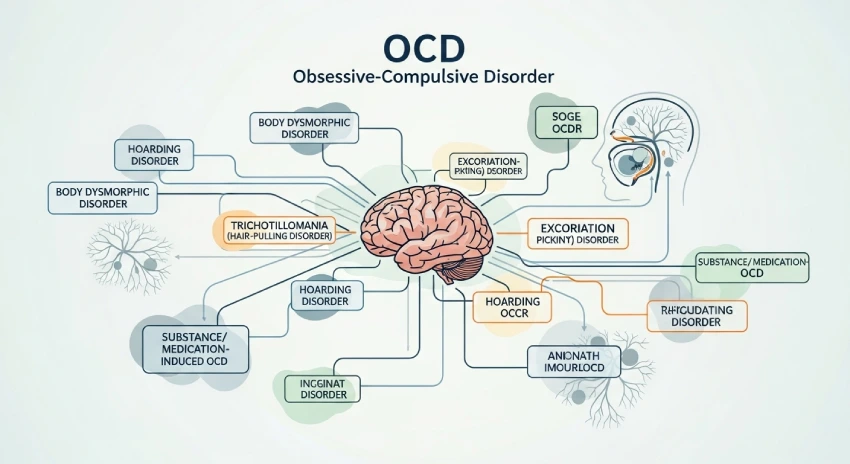
The New Category: Obsessive-Compulsive and Related Disorders
The new category includes several disorders that share repetitive behavioral patterns. These include:
- Hoarding disorder
- Body dysmorphic disorder
- Trichotillomania (hair-pulling)
- Excoriation (skin-picking)
Each of these conditions involves compulsive actions driven by internal urges, making them distinct from anxiety disorders.
Disorders Closely Related to OCD
These related disorders emphasize behavioral repetition rather than fear-based reactions. They often involve rituals or habits that provide temporary relief from distress.
However, these actions can become overwhelming and interfere with daily life. Grouping these disorders together helps professionals identify shared mechanisms. It also improves treatment strategies and outcomes for patients.
How OCD Differs from Anxiety Disorders?
Understanding the differences between OCD and anxiety disorders is essential for proper diagnosis and treatment. While they may appear similar on the surface, their underlying mechanisms are quite different.
The Core Cycle: Obsessions vs. Compulsions
OCD is defined by a continuous cycle of obsessions and compulsions. Obsessions are intrusive thoughts that cause distress, while compulsions are actions performed to relieve that distress.
This cycle becomes repetitive and difficult to control over time. The more a person engages in compulsions, the stronger the cycle becomes.
In contrast, anxiety disorders typically involve excessive worry without repetitive behavioral responses. This is a key distinction between the two.
Anxiety Disorders vs. OCD: Key Clinical Differences
Anxiety disorders are usually linked to real-life fears, such as social situations or specific phobias. OCD, however, often involves irrational or intrusive thoughts that may not be connected to real-world threats.
Compulsions in OCD are performed to neutralize these thoughts. Anxiety disorders generally do not involve such ritualistic behaviors.
Thought Patterns vs. Fear-Based Responses
OCD is driven by persistent, unwanted thoughts that feel intrusive and uncontrollable. These thoughts can occur without any external trigger, making them particularly distressing.
Anxiety disorders are more reactive, often triggered by external situations or perceived threats. This difference highlights the internal nature of OCD compared to the situational nature of anxiety.
Behavioral Repetition vs. Generalized Worry
Individuals with OCD often engage in repetitive behaviors like checking, counting, or cleaning. These actions are performed to reduce anxiety but only provide temporary relief.
In anxiety disorders, individuals may avoid certain situations but rarely engage in repetitive rituals. This behavioral repetition is one of the defining features of OCD.
Differences Table Between OCD & Anxiety Disorders
| Feature | OCD | Anxiety Disorders |
| Core Issue | Obsessions & Compulsions | Excessive Worry |
| Behavior | Repetitive rituals | Avoidance |
| Trigger | Intrusive thoughts | External stressors |
| Classification | Separate DSM-5 category | Anxiety category |
| Treatment | ERP + CBT | CBT + medication |
Effective Treatment Approaches for OCD and Anxiety
Treatment for OCD requires a structured and specialized approach. While some therapies overlap with anxiety treatment, OCD often demands more targeted interventions to break the cycle of obsessions and compulsions.
Exposure and Response Prevention (ERP): Gold Standard Therapy
ERP is considered the most effective therapy for OCD. It involves exposing individuals to anxiety-triggering situations while preventing compulsive responses.
Over time, this reduces the intensity of obsessive thoughts and weakens the compulsion cycle. ERP requires consistency and professional guidance. When done correctly, it can significantly improve long-term outcomes.
Cognitive Behavioral Therapy (CBT) for Both Conditions
CBT focuses on identifying and changing negative thought patterns. It is widely used for both OCD and anxiety disorders, making it a versatile treatment option. For OCD, CBT is often combined with ERP for better results. This combination addresses both thoughts and behaviors effectively.
Common Medications Used in Treatment
Medications play a supportive role in managing symptoms, especially when anxiety or insomnia is severe. Common medications include:
- Xanax tablets (xanax 1 mg, proper xanax dosage)
- Diazepam tablets (diazepam 10 mg, correct diazepam dosage)
- Clonazepam tablets (clonazepam 2 mg)
- Sleep aids like zopiclone 7.5 mg tablets and zolpidem 10 mg
These medications help reduce anxiety, improve sleep, and stabilize mood when used under proper guidance.
Signs You Should Seek Professional Help
Recognizing the signs of OCD or severe anxiety is essential for early intervention. Seeking help at the right time can prevent symptoms from becoming more severe and disruptive.
Persistent Intrusive Thoughts
Intrusive thoughts that are repetitive and distressing are a major indicator of OCD. These thoughts often feel uncontrollable and can interfere with daily activities. Ignoring them may worsen the condition over time. Professional support can help manage and reduce these thoughts effectively.
Repetitive Behaviors Affecting Daily Life
Compulsions such as checking, cleaning, or counting can become excessive. These behaviors may consume hours of the day and impact productivity. They are not simply habits but symptoms of an underlying condition. Treatment can help reduce the need for these repetitive actions.
Severe Anxiety That Feels Uncontrollable
When anxiety becomes overwhelming and persistent, it may indicate a deeper issue. This level of distress can affect both mental and physical health. Seeking professional help ensures proper diagnosis and treatment. Medications and therapy can help restore balance.
Sleep Disturbances and Mental Fatigue
Sleep issues are common in both OCD and anxiety disorders. Medications like:
- Zopiclone 7.5 mg Tablets
- Zolpidem (Ambien) 10 mg
can help improve sleep quality when used responsibly. Proper rest is essential for mental health recovery.
Why Choose Simply Sleeping Pills for Your Mental Health Needs?
Selecting the right provider for mental health support is a critical decision. At Simply Sleeping Pills, we prioritize safety, quality, and expert guidance to ensure the best outcomes for our customers.
We are recognized as the most trusted online pharmacy in the UK, specializing in insomnia and anxiety-related treatments. Our platform offers:
- Premium-quality medications from leading pharmaceutical companies
- Expert advice on xanax dosage, diazepam dosage, and clonazepam tablets
- Access to trusted options like Xanax Tablets 1 mg Tablets and Clonazepam 2 mg (INDIAN)
We are committed to providing reliable, discreet, and professional service to every customer.
Where to Access Trusted Treatment and Support?

Accessing safe and reliable treatment options is essential for managing OCD and anxiety effectively. We make this process simple and secure through our online platform.
You can:
- Buy Diazepam/Valium 10 mg safely
- Order Zopiclone 7.5 mg Tablets easily
- Access Zolpidem (Ambien) 10 mg for sleep support
We ensure all medications are sourced from reputable manufacturers. Our service includes guidance on proper usage and dosage to ensure safety.
Areas We Serve for OCD and Anxiety Support
Our mission is to provide accessible and reliable mental health solutions to a wide range of individuals. We currently serve:
- Customers across the UK
- Both urban and remote locations
- Individuals seeking support for insomnia and anxiety
We are continuously expanding to reach more communities. Our goal is to make high-quality treatment accessible to everyone in need.
FAQs
Can OCD cause panic attacks?
Yes, OCD can trigger panic attacks due to overwhelming intrusive thoughts. The constant cycle of obsessions and compulsions can create intense stress, leading to sudden episodes of fear and discomfort.
How long do sleeping pills last?
Sleeping medications like zolpidem 10 mg or zopiclone 7.5 mg tablets typically last between 6 to 8 hours. The duration depends on dosage, metabolism, and individual health conditions.
What is the best anxiety treatment?
The best treatment usually combines therapy and medication. CBT and ERP are highly effective, while medications like diazepam tablets or clonazepam tablets can help manage severe symptoms.
How can I control anxiety effectively?
Controlling anxiety involves a combination of therapy, medication, and lifestyle changes. Regular sleep, stress management, and professional guidance play a key role in long-term control.
Can anxiety cause chest pain?
Yes, anxiety can cause chest pain due to muscle tension and rapid breathing. However, it is important to consult a doctor to rule out any serious medical conditions.
OCD Is More Than Anxiety: It Needs the Right Approach
OCD is not just another form of anxiety, it is a distinct mental health condition with its own patterns and challenges. Understanding this difference is essential for proper diagnosis and effective treatment.
By recognizing the unique cycle of obsessions and compulsions, individuals can seek targeted therapies like ERP and CBT. Combined with appropriate medication and support, managing OCD becomes more achievable.
Taking action early and choosing the right support system can significantly improve quality of life and long-term mental well-being.