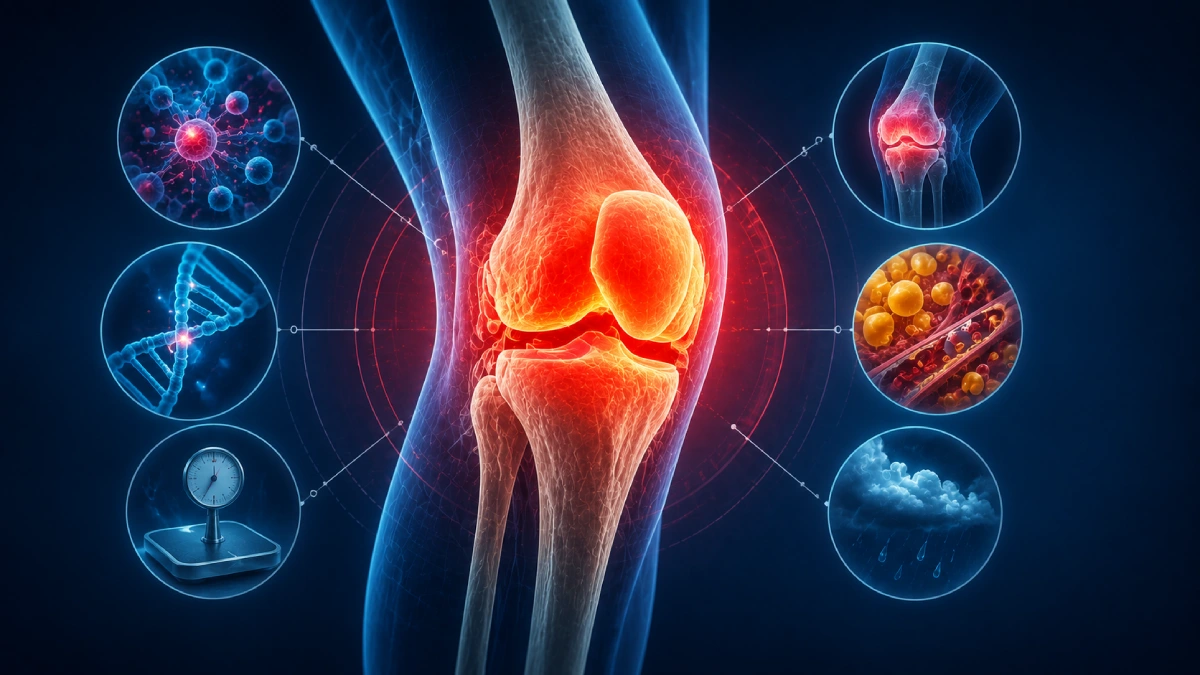
Knee pain without a fall, twist, or clear injury can feel confusing because the cause may come from the joint itself, the kneecap, tendons, arthritis, inflammation, footwear, hip mechanics, or even the lower back. The serious step is to identify the pain location, check movement triggers, watch for swelling, and understand the “Chain Reaction” between the hip, knee, ankle, and foot. The experienced solution is to match symptoms with likely causes, avoid masking warning signs, and get medical advice when pain is severe, persistent, swollen, hot, or worsening.
What Can Cause Knee Pain Without Injury?
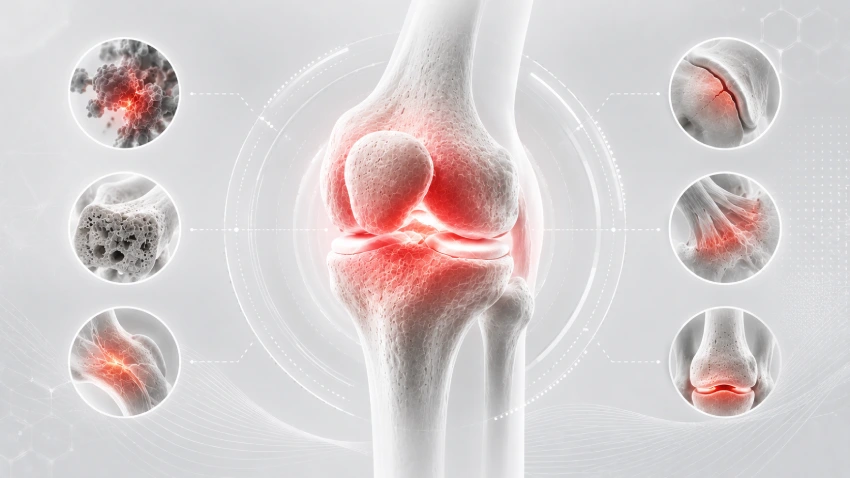
Knee pain without injury can come from mechanical, inflammatory, age-related, or referred causes. This section gives the core causes before mapping pain by exact knee location.
What can cause knee pain without injury? Common causes include patellofemoral pain syndrome, osteoarthritis, tendinitis, bursitis, Baker’s cyst, gout, inflammatory arthritis, flat-foot mechanics, muscle weakness, or pain referred from the hip or lower back.
The knee is a load-bearing joint. It absorbs pressure during walking, stairs, squatting, kneeling, running, and standing from a chair.
Pain can appear without a sudden accident when small stresses build up over time. Poor footwear, weak hips, tight muscles, repetitive stairs, excess weight, new exercise, or long sitting can all trigger symptoms.
Common non-injury causes include:
- Overuse pain
- Kneecap tracking problems
- Tendon irritation
- Early osteoarthritis
- Bursitis
- Baker’s cyst
- Gout or pseudogout
- Flat feet or poor footwear
- Hip or back referral
- Inflammatory joint disease
The key is not just asking whether you injured the knee. The better question is where the pain sits, what movement triggers it, and what other symptoms come with it.
Pinpointing by Pain Location: Map the Pain
Pinpointing by Pain Location helps narrow the likely cause. This section explains front, inside, outside, and back-of-knee pain patterns without pretending to replace diagnosis.
Pinpointing by Pain Location is one of the most useful ways to understand knee pain without injury. Different structures sit in different areas of the knee, so the exact pain spot can give strong clues.
Pain at the front of the knee often points toward kneecap tracking issues, patellar tendon irritation, or patellofemoral pain syndrome. This pain may worsen with stairs, squats, running, or sitting with bent knees for a long time.
Pain on the inside of the knee can suggest early osteoarthritis, medial meniscus irritation, or pes anserine bursitis. This may feel worse after walking, standing, or climbing stairs.
| Pain Location | Possible Cause | Common Trigger |
| Front of the knee | Patellofemoral pain, tendon irritation | Stairs, squats, running |
| Inside knee | Osteoarthritis, bursitis, and meniscus wear | Walking, standing, twisting |
| Outside knee | IT band irritation, lateral overload | Running, cycling, and downhill walking |
| Back of the knee | Baker’s cyst, swelling, tendon strain | Deep bending, swelling, tightness |
| Whole knee | Arthritis, inflammation, infection | Swelling, stiffness, warmth |
Pain at the back of the knee can come from a Baker’s cyst, swelling inside the joint, hamstring tendon irritation, or calf-related issues. If the calf is swollen, hot, red, or painful, medical help is important.
Outside knee pain may come from the iliotibial band. This is common in runners and cyclists when the tissue from the hip to the outside of the knee becomes irritated.
The Chain Reaction: Referred & Kinetic Pain
The Chain Reaction explains why knee pain may start outside the knee. This section covers hip weakness, back nerves, foot mechanics, ankle movement, and walking pattern stress.
The “Chain Reaction” (Referred & Kinetic Pain) means the knee can hurt because something above or below it is not moving correctly. The knee sits between the hip and foot, so it often takes the punishment when other areas fail.
A lower back problem can refer to pain in the leg and knee. Sciatica, nerve irritation, or lumbar spine issues may create pain, tingling, numbness, or weakness that feels like a knee problem.
Hip weakness can also overload the knee. If the glute muscles do not control the thigh well, the knee may drift inward during stairs, running, or squatting.
Chain-reaction sources include:
- Lower back nerve irritation
- Hip osteoarthritis
- Weak glute muscles
- Tight hip flexors
- Flat feet
- Overpronation
- Worn-out shoes
- Poor ankle mobility
- Uneven walking pattern
- Muscle imbalance
Readers with leg symptoms may also find lower back pain and numbness in leg useful, because nerve-related pain can travel and mimic joint pain.
For pelvic or nerve-pattern discomfort, sciatica cause pelvic pain, which may also help connect the dots between back, pelvis, and leg symptoms.
The knee is often the victim, not the original problem. That is why repeated knee pain should be assessed through the whole movement chain.
Age and Lifestyle Clues: Pattern Check
Age, activity, body weight, job demands, and daily movement can guide the likely cause. This section explains how different profiles develop knee pain without injury.
Age and lifestyle matter because knee pain causes change across life stages. A teenager with pain below the kneecap is different from an older adult with morning stiffness and grinding.
Younger active people often develop overuse pain. Running, football, cycling, gym work, jumping, and repeated stairs can irritate tendons or the kneecap tracking system.
Older adults are more likely to develop osteoarthritis or degenerative meniscus changes. This pain may feel stiff in the morning, ease slightly with movement, then worsen after long activity.
| Profile | More Likely Cause | Symptom Pattern |
| Teenagers | Growth-related tendon stress | Pain below the kneecap |
| Active adults | Overuse, IT band, patellofemoral pain | Worse with training |
| Desk workers | Weak hips, tight muscles | Pain on stairs or after sitting |
| Older adults | Osteoarthritis, degenerative change | Stiffness, grinding, swelling |
| Sudden flare | Gout, infection, inflammatory issue | Redness, warmth, severe pain |
Lifestyle clues matter too. Standing jobs, heavy lifting, kneeling work, sudden training changes, poor shoes, and weight gain can all increase knee load.
Pain that appears after a new exercise routine may be due to overuse. Pain with swelling, heat, fever, or night symptoms needs more caution.
Serious Medical Causes: Red Flags
Some knee pain without injury can come from infection, inflammatory disease, gout, or rare bone problems. This section explains when symptoms need faster medical care.
Most knee pain without injury is not dangerous, but some causes need urgent assessment. Severe swelling, redness, warmth, fever, or inability to bear weight should not be ignored.
Septic arthritis is a medical emergency because infection inside a joint can damage cartilage quickly. A hot, swollen, very painful knee with fever needs urgent help.
Gout or pseudogout can create sudden, intense pain with redness and swelling. It may feel like the knee became painful within hours without any accident.
Red flags include:
- Severe knee swelling
- Hot or red joint
- Fever or feeling unwell
- Sudden severe pain
- Inability to bear weight
- Pain wakes you at night
- Calf swelling or breathlessness
- Unexplained weight loss
- Knee deformity
- Pain after a recent infection
For wider body symptoms, extreme fatigue and joint pain may be useful because inflammatory or systemic problems can affect more than one area.
Persistent pain in multiple joints can also overlap with pain in elbow joints or other joint-pain patterns. Widespread symptoms should be assessed rather than treated as a simple knee strain.
Pain Relief Safety: Codeine Caution

Pain relief should reduce suffering without hiding serious symptoms. This section explains why co-codamol, codeine phosphate, and dihydrocodeine need careful medical oversight.
Medicines such as co-codamol 30/500mg, codeine phosphate 30mg, and dihydrocodeine may be prescribed for certain short-term pain situations when a clinician judges them appropriate. They are not a first-step solution for unexplained knee pain without assessment.
Opioid medicines can cause drowsiness, constipation, nausea, dependence, withdrawal symptoms, and dangerous interactions with alcohol, sedatives, or other medicines. They can also mask worsening pain that should be investigated.
Important safety points:
- Do not self-treat unexplained knee pain with opioids
- Do not combine opioid medicines
- Do not exceed paracetamol limits with co-codamol
- Avoid alcohol with codeine-based medicines
- Do not drive if drowsy
- Ask a pharmacist or doctor before use
- Seek help if pain is severe, swollen, hot, or worsening
For related musculoskeletal pain patterns, readers may also review iliosacral joint pain causes because hip and pelvic mechanics can influence the knee chain.
Knee pain should be treated by the cause. Painkillers may help symptoms, but they do not correct tracking problems, arthritis, bursitis, gout, infection, or referred nerve pain.
When to Get Help: Smart Next Step
Medical review is important when knee pain persists, worsens, swells, or affects daily movement. This section explains when self-care is reasonable and when assessment is safer.
Mild knee pain after a clear overuse trigger may improve with rest, activity changes, ice, supportive footwear, and gentle movement. But pain that lasts more than a few days or keeps returning deserves a proper review.
A doctor, physiotherapist, or musculoskeletal specialist may check alignment, swelling, range of motion, walking pattern, hip strength, foot mechanics, and tenderness location.
You should seek medical advice if:
- Pain lasts more than several days
- The knee is swollen or hot
- Walking becomes difficult
- Pain keeps returning
- The knee locks or gives way
- Morning stiffness is significant
- Pain spreads from the back or hip
- Several joints hurt together
- Pain wakes you at night
- Symptoms are getting worse
For unusual facial or nerve-type pain, sinus cause toothache pain is an example of how pain can appear away from its source. The knee can also hurt because of problems elsewhere in the body.
The safest next step is to track location, triggers, swelling, and movement limits before your appointment. That information helps the clinician narrow the cause faster.
Frequently Asked Questions
1. Can knee pain happen without any injury?
Yes. Knee pain can happen without injury due to overuse, arthritis, tendon irritation, bursitis, gout, referred pain from the back or hip, poor footwear, or muscle imbalance.
2. Why does the front of my knee hurt?
Front knee pain often relates to kneecap tracking, patellofemoral pain syndrome, or patellar tendon irritation. It may worsen with stairs, squats, running, or sitting with bent knees.
3. Can back problems cause knee pain?
Yes. Nerve irritation or referred pain from the lower back can travel down the leg and feel like knee pain. Tingling, numbness, or weakness may suggest nerve involvement.
4. When is knee pain without injury serious?
It is more serious when the knee is hot, red, very swollen, severely painful, or impossible to bear weight on. Fever, calf swelling, or night pain also needs medical attention.
5. Should I take codeine for knee pain?
Do not self-treat unexplained knee pain with codeine, dihydrocodeine, or co-codamol. These medicines need medical guidance and can cause dependence, drowsiness, constipation, and interactions.