

Leg nerve pain can feel sharp, burning, electric, tingling, numb, or strangely sensitive. The serious step is to identify whether the pain starts from the spine, diabetes-related nerve damage, or peripheral nerve irritation inside the leg. The experienced solution is to map the pain path, check weakness or numbness, review medical risk factors, and discuss safe treatment with a qualified clinician before symptoms worsen.
Quick clue: leg nerve pain usually comes from spine compression, diabetic neuropathy, or peripheral neuropathy.
What Causes Nerve Pain in Legs: Main Triggers

What causes nerve pain in legs usually comes down to nerve compression, nerve damage, or nerve irritation. This section explains the main causes without confusing nerve pain with ordinary muscle soreness.
Leg nerve pain happens when nerves send abnormal pain signals. The signal may start in the lower back, travel through the sciatic nerve, or come from damaged peripheral nerves in the feet and legs.
The main causes include:
- Spine and Nerve Compression
- Diabetic Neuropathy
- Peripheral Neuropathy
- Herniated or bulging discs
- Sciatica
- Spinal stenosis
- Vitamin B12 deficiency
- Alcohol-related nerve damage
- Local nerve entrapment
- Postherpetic neuralgia after shingles
Nerve pain often feels different from muscle pain. It may burn, tingle, shoot, shock, or create numbness. Muscle pain usually feels sore, stiff, tight, or tender after strain.
Readers who want a wider overview of Nerve Pain can connect leg symptoms with nerve pathways, pain receptors, sensory loss, and nerve signals. This helps explain why standard painkillers may not always work well for neuropathic pain.
For broader treatment-category awareness, Simply Sleeping Pills can be used as a service reference. Prescription medicines should always be discussed with a licensed healthcare professional.
| Cause Group | Common Pattern | Typical Feeling |
| Spine compression | Back to leg pathway | Shooting or electric |
| Diabetic neuropathy | Both feet upward | Burning or tingling |
| Peripheral neuropathy | Feet, calves, toes | Numbness or sensitivity |
| Local entrapment | One nerve area | Burning or pins |
| Shingles nerve pain | Past rash area | Burning and touch pain |
The first step is not guessing. The first step is noticing where pain starts, where it travels, what it feels like, and whether weakness or numbness is present.
Spine and Nerve Compression: Shooting Leg Pain
Spine and Nerve Compression can send sharp pain into the buttock, thigh, calf, or foot. This section explains how pinched nerve roots create radiating leg pain.
The nerves that supply the legs begin in the lower spine. If a disc, joint change, narrowing canal, inflammation, or scar tissue presses on a nerve root, pain can travel down the nerve pathway.
Common spine-related causes include:
- Herniated disc
- Bulging disc
- Lumbar disc hernia
- L4-L5 nerve compression
- Spinal stenosis
- Sciatica
- Collapsed discs
- Post-surgery scar tissue
- Muscle guarding around the spine
Sciatica is one of the best-known patterns. It can cause shooting pain from the lower back or buttocks into the leg. Some people also feel tingling, numbness, muscle weakness, or electric shock pain.
Spinal stenosis can feel different. It may cause heaviness, cramping, weakness, or pain in both legs while standing or walking. Some people feel temporary relief when leaning forward.
A simple spine pattern table helps:
| Symptom | Possible Spine Link | What to Track |
| Shooting leg pain | Sciatica | Pathway down leg |
| Foot tingling | Nerve root irritation | Toe or sole location |
| Leg weakness | Motor nerve pressure | Walking changes |
| Pain when sitting | Disc or sciatic irritation | Sitting duration |
| Relief leaning forward | Spinal stenosis | Walking distance |
People comparing whether Nerve Pain Differs From Muscle Pain should notice travel pattern. Muscle pain usually stays local. Nerve compression often radiates down a line.
Spine-related nerve pain should be checked if it worsens, spreads, causes weakness, or affects bladder or bowel control.
Diabetic Neuropathy: Burning Feet Pattern
Diabetic Neuropathy is one of the most common causes of leg and foot nerve pain. This section explains how blood sugar damage can affect the nerves in the feet and lower legs.
High blood sugar over time can damage the small blood vessels that supply nerves. When nerves do not receive enough oxygen and nutrients, they may stop sending normal signals. This often starts in the feet.
Diabetic nerve pain often appears as:
- Burning feet
- Tingling toes
- Numb soles
- Pins and needles
- Reduced feeling
- Foot sensitivity
- Balance changes
- Pain worse at night
This pattern is often symmetrical. It may affect both feet first, then move upward toward the calves. Some people describe it as a “stocking” pattern because it starts where socks sit.
The connection between blood sugar and nerve pain matters because better glucose control may slow progression and reduce complications. Foot checks are also important because numbness can hide cuts, blisters, or pressure wounds.
A practical diabetic neuropathy table:
| Sign | Why It Matters |
| Burning feet | Common neuropathic pain clue |
| Numbness | Injury may go unnoticed |
| Tingling toes | Early sensory change |
| Balance issues | Reduced foot feedback |
| Night pain | Sleep disruption risk |
| Slow-healing wounds | Needs medical review |
If diabetes is present, leg nerve pain should not be treated as random discomfort. It may reflect a wider nerve and circulation issue that needs ongoing care.
Peripheral Neuropathy: Damaged Nerve Pathways
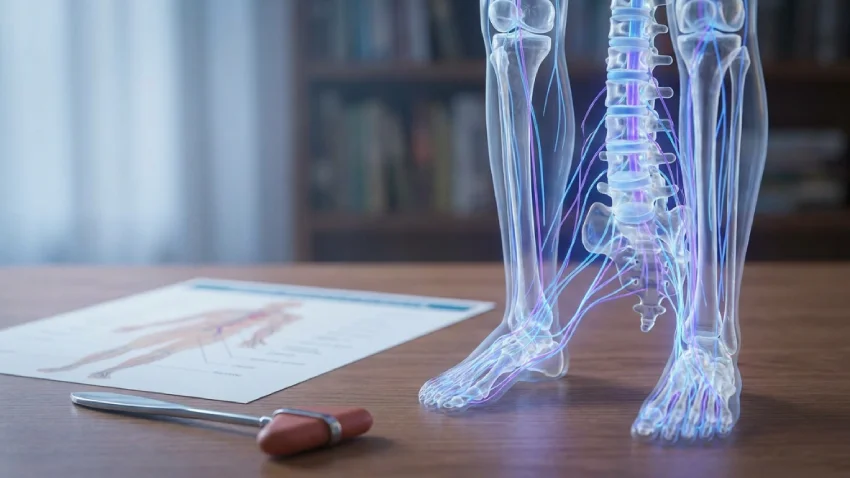
Peripheral Neuropathy happens when nerves outside the brain and spinal cord become damaged. This section explains why leg symptoms can start in the feet, toes, calves, or local nerve pathways.
Peripheral nerves carry signals between the body and the central nervous system. When these nerves are injured, compressed, inflamed, or deprived of nutrients, they can misfire.
Common causes include:
- Diabetes
- Vitamin B12 deficiency
- Alcohol misuse
- Chemotherapy or some medicines
- Infection
- Autoimmune disease
- Toxin exposure
- Physical nerve injury
- Local nerve compression
- Shingles nerve pain
Peripheral neuropathy may affect sensory, motor, or autonomic nerves. Sensory symptoms include burning, tingling, numbness, and hypersensitivity. Motor symptoms include weakness, cramps, foot drop, or balance difficulty.
People often describe burning nerve pain as heat under the skin. It may feel worse at rest or at night, even when the skin looks normal.
Some people wonder whether Nerves Heal Naturally Over Time. Recovery depends on the cause, severity, blood sugar control, compression level, and how early the issue is treated.
| Peripheral Cause | Common Leg Pattern |
| Diabetes | Burning or numb feet |
| B12 deficiency | Tingling and sensory loss |
| Alcohol-related damage | Feet and leg symptoms |
| Local entrapment | One focused nerve area |
| Shingles | Burning in past rash area |
| Chemotherapy | Symmetrical foot symptoms |
Peripheral neuropathy should be reviewed when symptoms are persistent, spreading, or linked with weakness, wounds, or balance problems.
Symptom Mapping: What the Pain Feels Like
Symptom mapping helps separate nerve pain from muscle, joint, or circulation pain. This section shows how sensation, location, and timing can point toward the likely nerve cause.
Nerve pain often has a distinct quality. It may feel like electric shock, burning, stabbing, buzzing, crawling, tingling, or numbness. It may also create allodynia, where soft touch or bedding feels painful.
Useful symptom clues include:
- Electric shock pain: often linked with nerve root irritation
- Burning feet: often linked with neuropathy
- Numbness: reduced sensory signal
- Weakness: possible motor nerve involvement
- Tingling: sensory nerve irritation
- Touch sensitivity: nerve hypersensitivity
- Radiating pain: pathway irritation
A symptom map may look like this:
| Feeling | Possible Direction | What to Note |
| Shooting line down leg | Sciatica or disc issue | Start and end point |
| Burning both feet | Peripheral neuropathy | Symmetry |
| Numb toes | Sensory nerve change | Spread |
| Foot drop | Motor nerve concern | Walking change |
| Pain from the bedsheet | Hypersensitivity | Skin trigger |
| Spasm with pain | Muscle guarding | Back or hip link |
People who are sleeping with nerve pain should track night timing. Nerve symptoms often become more noticeable at rest because there are fewer distractions.
Readers can also review Pregabalin vs Tramadol as a comparison topic, but medicine choice should always be made by a qualified prescriber.
The more precise the symptom description, the better the next step. “My leg hurts” is vague. “Electric pain travels from my lower back to my left calf with toe numbness” is useful.
Red Flags: When Leg Nerve Pain Is Urgent
Red flags are symptoms that should not wait. This section explains when leg nerve pain may signal serious compression, neurological deficit, or another urgent problem.
Most leg nerve pain is not an emergency, but some symptoms need fast medical care. Severe nerve compression can cause permanent damage if ignored.
Seek urgent medical help for:
- New bladder or bowel dysfunction
- Saddle numbness around groin or inner thighs
- Sudden lower limb weakness
- Progressive foot drop
- Numbness spreading quickly
- Fever with severe back or leg pain
- Pain after major injury
- Unexplained weight loss with pain
- Severe pain that is rapidly worsening
Cauda equina syndrome is a rare but serious condition. It can involve saddle anesthesia, bladder or bowel changes, leg weakness, and severe nerve compression at the base of the spine.
A red flag table:
| Red Flag | Why It Matters |
| Bladder changes | Possible severe nerve compression |
| Saddle numbness | Emergency warning sign |
| Foot drop | Motor nerve involvement |
| Rapid weakness | Possible neurological deficit |
| Fever with pain | Infection concern |
| Trauma-related pain | Structural injury risk |
Do not treat urgent symptoms with only home care, pain tablets, or rest. Emergency review is safer when weakness, saddle numbness, or bladder changes appear.
Treatment Review: Safe Medication Discussion
Treatment review should match the cause of the nerve pain. This section positions medication and service links responsibly without encouraging unsafe self-treatment.
Leg nerve pain may need different care depending on whether it comes from the spine, diabetes, peripheral neuropathy, or local nerve compression. Some people need physiotherapy, imaging, blood tests, diabetes review, injections, or specialist referral.
For prescription-only pain discussions,buy tramadol should only be considered under medical supervision. Tramadol can cause sedation, dependence, breathing risk, and interactions with other medicines.
People searching for order tramadol 50mg online information should speak with a licensed prescriber first. Tramadol is not a first-line answer for many neuropathic pain patterns and may not be suitable for everyone.
For neuropathic pain discussions, buy pregabalin online uk should be treated as a prescription-supervised topic. Pregabalin can cause dizziness, drowsiness, dependence concerns, and withdrawal effects if stopped suddenly.
People looking into buy pregabalin online should first confirm the diagnosis, cause, dose suitability, and safety risks with a clinician. This is especially important if they use alcohol, opioids, sedatives, or other medicines.
Additional search terms such as pregabalin 300mg online order and buy pregabalin next day delivery should not replace a medical assessment. Fast access does not mean safe use.
Likewise, 50mg tramadol price should not be the main decision point. The safer question is whether tramadol is medically appropriate for the person’s pain type, history, and current medicines.
A safe treatment review should cover:
- Pain location and pathway
- Burning, tingling, numbness, or weakness
- Diabetes or blood sugar issues
- Current medicines
- Alcohol or sedative use
- Breathing or sleep concerns
- Dependence history
- Red flag symptoms
- Treatment goals
For wider category awareness, Simply Sleeping Pills can be used as a service reference. Medication decisions should remain clinician-led and safety-focused.
Daily Support: Better Tracking and Sleep
Daily support can reduce avoidable triggers and improve symptom conversations. This section explains how tracking, sleep positioning, and simple routines can help people manage leg nerve pain more safely.
Start with a short symptom log. Track where the pain starts, where it travels, what it feels like, what worsens it, and whether numbness or weakness appears. Use a 0 to 10 pain score only as one part of the record.
Track these details:
- Pain pathway
- Pain type
- Pain score
- Numbness or weakness
- Walking changes
- Sleep disruption
- Blood sugar if relevant
- Medication timing
- Sitting or standing triggers
- What gives relief
People trying to manage nerve pain at night should pay attention to bedding pressure, sleep position, leg support, and night waking. Night pain often shows patterns that daytime activity hides.
A simple tracker:
| Detail | Example |
| Pain type | Burning and tingling |
| Location | Both feet |
| Worst time | Night |
| Score | 7 out of 10 |
| Trigger | Long sitting |
| Relief | Position change |
| Concern | Toe numbness |
Gentle movement may help some people, but worsening pain, foot drop, or new weakness should not be pushed through. The right support depends on the cause.
Clear tracking helps the clinician decide whether the issue looks like spine compression, diabetic neuropathy, peripheral neuropathy, or another condition.
Frequently Asked Questions: Leg Nerve Pain
1. What is the most common cause of nerve pain in legs?
Common causes include sciatica from spinal nerve compression, diabetic neuropathy, and peripheral neuropathy. The pattern matters. Shooting pain often suggests spine involvement, while burning in both feet may suggest neuropathy.
2. How do I know if leg pain is nerve-related?
Nerve-related leg pain often feels burning, electric, tingling, numb, shooting, or sensitive to touch. It may travel down a nerve path or appear with weakness, foot numbness, or altered sensation.
3. Can diabetes cause nerve pain in the legs?
Yes. Diabetes can damage nerves, especially in the feet and lower legs. Symptoms may include burning, tingling, numbness, pain at night, reduced sensation, balance problems, and slow-healing foot wounds.
4. When should I worry about leg nerve pain?
Worry if pain comes with new weakness, foot drop, saddle numbness, bladder or bowel changes, spreading numbness, fever, trauma, or rapidly worsening symptoms. These signs need urgent medical review.
5. Can leg nerve pain go away naturally?
Some nerve irritation may improve if the cause is temporary, such as mild compression. Long-term neuropathy, diabetes-related damage, severe compression, or progressive weakness needs professional assessment and targeted care.