


Pain does not only keep someone awake. It can break sleep into lighter stages, reduce deep recovery, and leave the body more sensitive the next day.
The serious action is to stop treating night pain and poor sleep as separate problems. They often work together through insomnia, fragmented sleep, reduced deep sleep, and daytime fatigue.
The experienced solution is to identify the pain pattern, improve sleep conditions, review medication safely with a clinician, and break the cycle before it becomes long-term.
Quick clue: pain wakes the brain, poor sleep sharpens pain, and the cycle repeats unless both are managed together.
How Pain Affects Sleep Quality?

Pain affects sleep quality by keeping the nervous system alert when it should be slowing down. This can lead to insomnia, fragmented sleep, reduced deep sleep, and daytime fatigue. Over time, this connection often leads to a cycle of chronic pain, depression, and anxiety.
When pain continues at night, the brain may stay in a protective mode. Instead of relaxing into deeper sleep, it keeps scanning the body for discomfort. This makes sleep feel shallow, broken, and less refreshing.
The main problem is not only “less sleep.” The deeper issue is lower-quality sleep. A person may spend seven or eight hours in bed but still wake up tired because pain has interrupted the natural sleep cycle.
Pain can affect sleep in several direct ways:
- It delays sleep onset.
- It causes repeated waking.
- It reduces deep sleep.
- It increases early-morning tiredness.
- It raises anxiety around bedtime.
- It makes the next day’s pain feel stronger.
This is why many people with back pain, joint pain, nerve pain, or post-injury pain feel trapped. Pain makes sleep worse, and poor sleep makes pain harder to tolerate.
A useful way to understand the cycle is simple:
| Night Problem | Sleep Effect | Next-Day Result |
| Pain flare-up | Delayed sleep | Morning fatigue |
| Nerve irritation | Frequent waking | Low focus |
| Muscle stiffness | Light sleep | More soreness |
| Anxiety about pain | Insomnia | Higher pain sensitivity |
| Poor recovery | Reduced deep sleep | Mood changes |
This cycle becomes more serious when pain is ignored for weeks or months. The body may begin to expect poor sleep. The brain may also connect bedtime with discomfort, stress, and frustration.
That is why pain-related sleep problems need a full approach. Sleep position, pain type, stress level, daily movement, and medication review all matter.
For people exploring sleep-support or pain-related treatment information, Simply Sleeping Pills can be positioned as a place to understand available categories, but any prescription medicine should be discussed with a qualified healthcare professional.
Pain Signals at Night: Why Sleep Breaks
Night pain feels stronger because the body has fewer distractions. During the day, movement, tasks, work, and conversation may partly hide pain signals. At night, silence can make every ache feel louder.
Pain signals interrupt sleep because the nervous system treats discomfort as a warning. Even mild pain can trigger small awakenings that the person may not fully remember. These awakenings still reduce sleep quality.
Some pain types are more likely to disturb sleep. Nerve pain, burning sensations, sciatica, arthritis, and postural pain can all become worse when the body stays still for long periods.
Common night pain patterns include:
- Burning pain in the legs or feet.
- Sharp pain when turning in bed.
- Throbbing pain after inflammation.
- Tingling that increases at rest.
- Back pain after lying too long.
- Stiff joints after reduced movement.
People with Nerve Pain often describe sleep disruption differently from muscle soreness. Nerve-related symptoms may feel electric, hot, stabbing, crawling, or unpredictable.
This matters because the solution depends on the pain source. Muscle tension may improve with stretching, heat, and posture changes. Nerve pain may need a more targeted clinical review.
Some people also notice Tingling Sensations at night. Tingling can disturb sleep because it creates a constant urge to move, rub, stretch, or change position.
When these symptoms continue, the sleep pattern becomes unstable. The person may start going to bed worried. That worry alone can make insomnia worse.
Fragmented Sleep: The Real Damage
Fragmented sleep means sleep is repeatedly interrupted through the night. The person may not always wake fully, but the brain keeps moving out of deeper sleep into lighter stages. This is one of the biggest ways pain damages sleep quality.
This type of sleep can feel confusing. Someone may say, “I slept all night,” but still wake up exhausted. The reason is that the brain did not stay in restorative sleep long enough.
Pain-related fragmented sleep often creates:
- Frequent position changes.
- Short awakenings.
- Restless dreams.
- Early morning waking.
- Tension before bedtime.
- Feeling unrefreshed after sleep.
This pattern can also increase daytime fatigue. The body does not get enough stable recovery time. Muscles remain tense, mood drops, and focus becomes harder.
Fragmented sleep can also make pain feel more intense the next day. Poor sleep lowers tolerance and raises sensitivity. This means the same pain may feel sharper after a bad night.
Here is a simple view of the cycle:
| Stage | What Happens | Result |
| Pain starts | The body becomes alert | Sleep is delayed |
| Sleep begins | Pain interrupts rest | Light sleep increases |
| Night continues | Waking repeats | Deep sleep drops |
| Morning arrives | Body feels unrecovered | Fatigue increases |
| Next day | Pain feels stronger | Cycle continues |
For people who struggle with sleeping with nerve pain, fragmented sleep can be especially draining. Nerve symptoms can change quickly and wake the brain repeatedly.
The goal is not only to sleep longer. The goal is to sleep more continuously. Even small improvements in uninterrupted sleep can improve energy and pain tolerance.
Deep Sleep Loss: Why Recovery Slows
Deep sleep is when the body repairs tissue, balances hormones, and restores energy. Pain can reduce deep sleep by keeping the body in a lighter and more alert state. This makes recovery slower and mornings harder.
Reduced deep sleep is one reason pain can feel worse over time. The body does not get the same repair window. Muscles stay tight, inflammation may feel worse, and the nervous system becomes more reactive.
Deep sleep loss may show up as:
- Waking with heavy fatigue.
- Feeling sore before moving.
- Low motivation in the morning.
- Mood swings after poor sleep.
- Increased sensitivity to pressure.
- Reduced ability to handle stress.
People often try to fix this by staying in bed longer. But more bed time does not always mean better sleep. If pain keeps breaking sleep, the quality remains poor.
This is where tracking becomes useful. A simple sleep and pain log can reveal whether symptoms are worse after certain activities, meals, stress, positions, or medication timing.
People with conditions such as Diabetic Neuropathy may need extra attention to night symptoms. Burning, numbness, or foot pain can directly disturb deep sleep.
If pain is linked with blood sugar changes, the night pattern can become more complex. The connection between blood sugar and nerve pain may be important for people with diabetes or suspected neuropathy.
Deep sleep loss is not just tiredness. It is a recovery problem. The longer it continues, the more the body may struggle to reset.
Pain, Mood, and Fatigue: The Daily Crash
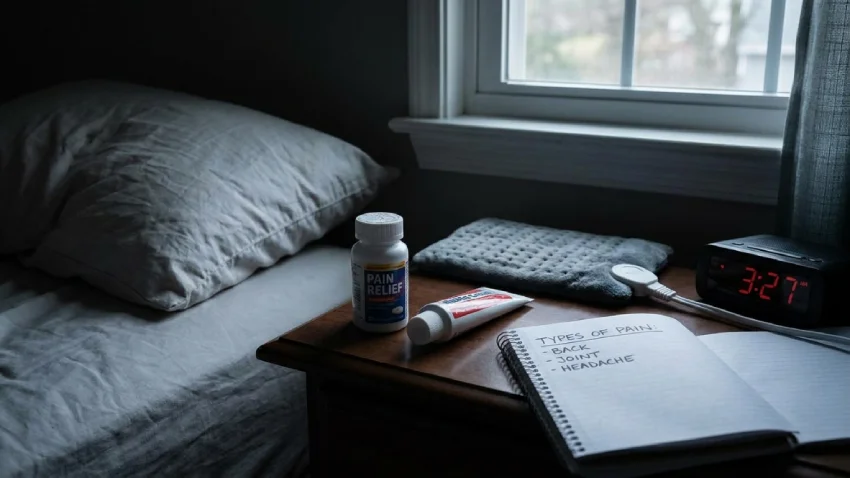
Pain, poor sleep, mood changes, and fatigue often move together. A person may start with physical pain, then develop poor sleep, then daytime tiredness, then anxiety about another bad night. This creates a difficult loop.
This connection often leads to a cycle of chronic pain, depression, and anxiety. The pain affects sleep, sleep affects emotional control, and emotional stress increases pain sensitivity.
Daytime fatigue is usually the first visible sign. The person may feel slow, irritable, foggy, or less patient. Work, family, and normal routines can become harder.
Common signs of this daily crash include:
- Low concentration.
- Morning headaches.
- Irritability.
- Reduced motivation.
- Fear of bedtime.
- More pain awareness.
- Less physical activity.
This can also lead to avoidance. People may move less because they are tired or afraid of pain. Less movement can increase stiffness, which then makes sleep worse again.
For some people, understanding pain severity levels helps them explain symptoms more clearly. It also helps clinicians understand whether pain is mild, moderate, severe, sudden, or worsening.
A simple self-check can help:
| Question | Why It Matters |
| Is pain waking you more than twice? | Shows sleep fragmentation |
| Is pain worse after poor sleep? | Shows sensitivity cycle |
| Are you anxious before bed? | Shows conditioned insomnia |
| Are you tired every morning? | Shows poor recovery |
| Is the mood becoming lower? | Shows wider impact |
If mood symptoms become strong, professional support matters. Pain-related sleep problems should not be treated as weakness. They are often a nervous system and recovery issue.
Night Pain Mapping: Find the Pattern
Night pain mapping means identifying what pain does before, during, and after sleep. It helps turn a vague problem into a clear pattern. This can make treatment conversations more accurate and useful.
Start by noting when pain begins. Some people feel pain before getting into bed. Others fall asleep easily but wake at 2 or 3 a.m. with burning, stiffness, or pressure pain.
Next, note where the pain appears. Back, hip, shoulder, knee, foot, and nerve pain often need different strategies. Pain that moves or changes may need closer review.
A useful pain map should include:
- Pain location.
- Pain type.
- Pain intensity.
- Time of waking.
- Sleep position.
- Morning symptoms.
- Triggers from the day before.
Pain type matters. burning nerve pain may suggest a different pathway than tight muscle pain. Sharp shooting pain may need a different review from dull aching pain.
People may also compare whether Nerve Pain Differs From Muscle Pain in their symptoms. This can prevent the wrong solution from being used repeatedly.
For example, stretching may help tight muscles. But if symptoms are burning, tingling, or electric, the issue may involve nerve irritation.
Here is a simple mapping table:
| Pain Description | Possible Sleep Impact | What to Note |
| Repeated waking | Feet, legs, hands |
| Pain with movement | Turning in bed |
| Hard to settle | Joint or muscle area |
| Restlessness | Numbness or pins |
| Early waking | Inflammation pattern |
A pain map does not replace medical advice. It simply makes the conversation better. Clear notes can help a clinician decide whether the focus should be on sleep, pain source, nerve symptoms, inflammation, or medication review.
Medication Conversations: Safe Clinical Review
Medication should be discussed carefully because pain, sleep, anxiety, and sedative medicines can overlap. Some medicines may help certain symptoms, but they can also cause drowsiness, dependence, tolerance, breathing risk, or next-day impairment.
This section should not be used as self-treatment advice. Prescription medicines need professional assessment, correct dosing, and safety checks. This is especially important when combining pain medicines, sleeping tablets, or anxiety medicines.
Some people may be prescribed Codeine Phosphate for pain under medical supervision. Codeine is an opioid medicine and should not be treated as a sleep aid.
Others may discuss Dihydrocodeine with a clinician for certain pain situations. It also requires caution because opioid medicines can affect alertness, breathing, and the risk of dependence.
A healthcare professional may also review Tramadol in specific pain cases. It should be used only as directed because it can interact with other medicines and may not be suitable for everyone.
For nerve-related pain, some patients may be assessed for Pregabalin. It may be relevant in neuropathic pain discussions, but it also carries sedation and dependence concerns.
For short-term insomnia, a clinician may discuss Zopiclone. This type of medicine should be used carefully and usually for short periods because of dependence and next-day drowsiness concerns.
For anxiety-related sleep issues, Xanax Tablets should only be considered within strict medical supervision. Benzodiazepines can cause sedation and can be dangerous when mixed with opioids or alcohol.
A safer medication conversation should cover:
- What is the exact pain type?
- Is insomnia caused by pain or anxiety?
- Are medicines being mixed?
- Is there daytime drowsiness?
- Is breathing affected during sleep?
- Is there a history of dependence?
- Is the medicine still working?
People can also use Simply Sleeping Pills as a reference point for category awareness, but treatment decisions should always be made with a licensed medical professional.
Practical Sleep Reset: Pain-Smart Steps

A pain-smart sleep reset focuses on reducing triggers before sleep and improving recovery during the night. It does not rely on one solution. It combines positioning, routine, pacing, relaxation, and clinical support when needed.
Start with the sleep surface. A mattress or pillow that increases pressure on painful areas can worsen waking. Small changes in alignment may reduce pressure on the spine, hips, knees, or shoulders.
Next, review evening movement. Too much activity can flare pain. Too little movement can increase stiffness. Gentle movement is often better than complete rest.
Helpful steps include:
- Use supportive pillows.
- Keep a steady sleep schedule.
- Avoid long daytime naps.
- Stretch gently before bed.
- Use heat or cold when suitable.
- Reduce late-night screen stress.
- Keep the room cool and quiet.
- Track pain and sleep together.
For people with nerve symptoms, learning how to manage nerve pain at night can be more useful than general sleep tips. Nerve pain often needs targeted strategies.
Gentle movement may also help some people. pain friendly exercises can reduce stiffness and improve confidence without forcing the body into painful activity.
A structured reset may look like this:
| Time | Action | Goal |
| Evening | Light movement | Reduce stiffness |
| 1 hour before bed | Calm routine | Lower alertness |
| Bedtime | Supportive position | Reduce pressure |
| Night waking | Brief reset | Avoid frustration |
| Morning | Gentle mobility | Reduce pain carryover |
The key is consistency. Pain-related sleep problems rarely improve through one perfect night. They improve when the nervous system repeatedly receives safer signals.
For broader sleep and pain support, Simply Sleeping Pills can be linked as the main service reference while keeping medicine choices clinician-led.
When to Get Help: Red Flags?
Some pain and sleep problems need professional attention quickly. Pain that is severe, worsening, unexplained, or linked with neurological symptoms should not be ignored. Sleep loss combined with strong mood changes also needs support.
Red flags may include sudden weakness, loss of bladder or bowel control, chest pain, severe night sweats, fever, unexplained weight loss, or pain after major injury. These symptoms need urgent medical review.
For nerve-related concerns, signs of neuropathic pain can include burning, tingling, electric shock sensations, numbness, and pain from light touch.
People with sciatica-like symptoms may benefit from learning about Treatments for Sciatica. Sciatica can disturb sleep because pain may travel from the lower back into the leg.
Some people also wonder whether Nerves Heal Naturally Over Time. Recovery depends on the cause, severity, health conditions, and how early the problem is addressed.
Get help when:
- Pain wakes you most nights.
- Sleep loss lasts more than a few weeks.
- Pain is spreading or changing.
- Numbness or weakness appears.
- My mood is becoming worse.
- Medicines feel less effective.
- You need higher doses to cope.
- You feel unsafe or overwhelmed.
The earlier the pattern is addressed, the easier it may be to break. Pain and sleep should be treated as connected parts of the same recovery picture.
Frequently Asked Questions: Fast Pain-Sleep Answers
1. Why does pain feel worse at night?
Pain often feels worse at night because there are fewer distractions, the body is still, and the brain becomes more aware of discomfort. Inflammation, posture, stress, and nerve sensitivity can also make night pain stronger.
2. Can poor sleep make pain worse the next day?
Yes. Poor sleep can increase pain sensitivity, reduce recovery, and lower tolerance. This means the same pain may feel stronger after a broken night, especially when sleep is fragmented or deep sleep is reduced.
3. What type of pain most commonly affects sleep?
Back pain, joint pain, nerve pain, sciatica, arthritis, and diabetic neuropathy commonly affect sleep. Burning, tingling, stabbing, or pressure-related pain can repeatedly wake the brain and reduce restorative sleep.
4. Is insomnia from pain different from normal insomnia?
Pain-related insomnia usually has a physical trigger. The person may want to sleep but cannot settle because discomfort keeps the nervous system alert. Over time, fear of another painful night can make insomnia worse.
5. When should I talk to a doctor about pain and sleep?
Speak with a doctor if pain wakes you most nights, lasts several weeks, spreads, causes weakness or numbness, affects your mood, or leads to regular medication use. Urgent symptoms should be reviewed immediately.
